

+918048055104

Currently it only shows your basic business info. Start adding relevant business details such as description, images and products or services to gain your customers attention by using Boost 360 android app / iOS App / web portal.

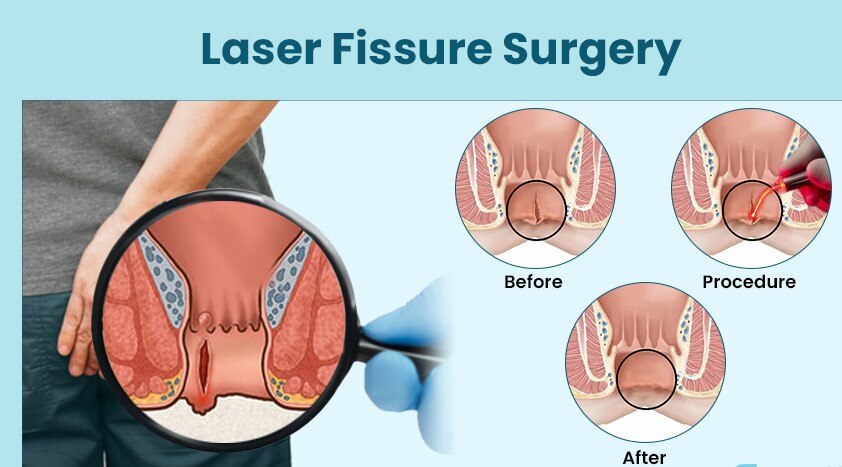
💥 Anal Fissure Surgery Overview Anal fissure surgery is typically considered when chronic fissures fail to heal with medical management (topical nitrates, calcium channel blockers, Botox, etc.). The goal of surgery is to relieve pain, promote healing, and prevent recurrence while preserving continence. --- ⚖️ Indications for Surgery Chronic fissure lasting >6 weeks Failed medical therapy Severe, persistent pain with defecation Sentinel pile or hypertrophied anal papilla Fissure associated with internal sphincter spasm Recurrent fissures --- 🔪 Surgical Options 1. Lateral Internal Sphincterotomy (LIS) – Gold Standard Procedure: Division of the internal anal sphincter (partial) Approach: Open or closed Goal: Reduces sphincter pressure to promote healing ✅ Advantages: High healing rates (>90%) Immediate pain relief ⚠️ Risks: Minor incontinence (gas or mucus incontinence in <10%) Bleeding, infection --- 2. Botulinum Toxin Injection (if not already tried) Used to temporarily paralyze internal sphincter Can be an alternative for high-risk patients (e.g. elderly, postpartum women) --- 3. Fissurectomy (Rarely Done Alone) Excision of the fissure, often combined with: Anoplasty (flap coverage) Sphincterotomy (if needed) --- 4. Anal Advancement Flap Indicated for: Recurrent fissures Fissures with minimal sphincter hypertonia High-risk patients where sphincterotomy is contraindicated --- 🏥 Postoperative Care Sitz baths to soothe area and keep it clean High-fiber diet + fluids to avoid constipation Stool softeners or laxatives Pain management (NSAIDs or acetaminophen) Wound care if open technique used --- 📉 Outcomes Healing rates with LIS: ~95% Recurrence: <10% Continence issues: mild and often temporary in a minority --- ❗Contraindications for LIS: Pre-existing fecal incontinence History of sphincter injury Crohn’s disease (relative) ---


