

+918048055104

Currently it only shows your basic business info. Start adding relevant business details such as description, images and products or services to gain your customers attention by using Boost 360 android app / iOS App / web portal.

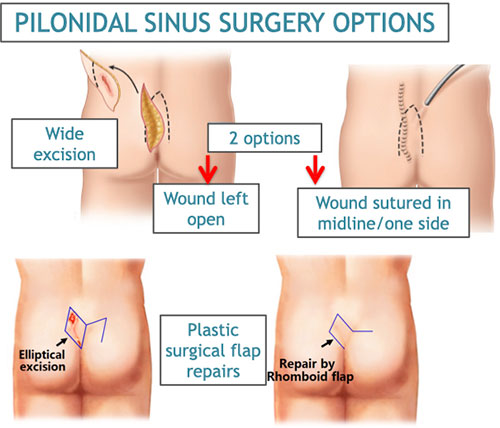
A pilonidal sinus is a small hole or tunnel in the skin, typically at the top of the buttocks (near the coccyx), that can become infected and filled with pus, forming a pilonidal abscess. It’s a common condition, especially in young adults, and is more frequent in males. 🔍 Causes The exact cause isn’t fully understood, but contributing factors include: Ingrown hairs: Loose hairs penetrate the skin, causing inflammation Friction or prolonged sitting Poor hygiene Excess body hair and sweating Genetic predisposition (deep natal cleft) ⚠️ Symptoms Pain and swelling near the top of the buttocks Redness and tenderness in the area Pus or bloody discharge from a small opening (sinus tract) Foul-smelling drainage Fever (if infected/abscess forms) 🔬 Diagnosis Based on physical examination A visible midline pit or opening in the sacrococcygeal area May have multiple tracts or openings if chronic 💉 Treatment Options 1. Acute Abscess Incision and drainage (I&D): Immediate relief Often performed under local anesthesia Wound may be packed and left to heal by secondary intention 2. Chronic or Recurrent Pilonidal Sinus Surgical excision of sinus tracts Options include: Wide excision with open healing (low recurrence, longer healing) Excision with primary closure (faster healing, higher recurrence) Flap procedures (e.g., Limberg flap, Karydakis flap) for recurrent or complex cases 3. Minimally Invasive Techniques Phenol injection, laser treatment, or endoscopic pilonidal sinus treatment (EPSiT) Less invasive, faster recovery Lower recurrence in selected patients 🩺 Postoperative Care Keep the area clean and dry Shaving or laser hair removal to reduce recurrence Avoid prolonged sitting during recovery Regular follow-up to monitor healing ⚠️ Complications Recurrent infection or sinus formation Chronic wound Scar formation Cellulitis or spreading infection (rare)


